Excision vs. Ablation for Endometriosis: When "Superficial" Disease Runs Deep
Excision vs. ablation for endometriosis: Dr. Victoria Vargas reveals how superficial-looking disease can hide deep endometriosis and why technique matters.
By Dr. Victoria Vargas, MD, MS, FACOG · Reviewed by Dr. Melissa McHale, MD, FACOG
If you have been researching endometriosis surgery, you have probably heard about the debate over endometriosis excision vs. ablation. The two approaches can sound interchangeable, but they are not, especially when endometriosis extends beneath the surface.
A recent case in my practice, Washington Endometriosis and Complex Surgery (WECS), shows why I believe excision is the better option for most patients.
Persistent Symptoms After Endometriosis Surgery
This patient had surgery for endometriosis in 2025, but her symptoms continued afterward. She wasn't sure her surgeon had removed all of her endometriosis.
Persistent symptoms after endometriosis surgery can include chronic pelvic pain, painful periods, pain during intercourse, bowel or bladder symptoms, and lower back pain. While these symptoms can have several causes, persistent or incompletely removed endometriosis is one possibility.
We counseled her on her options, and she decided to have another surgery.
When Superficial-Looking Endometriosis Is Actually Deep Disease
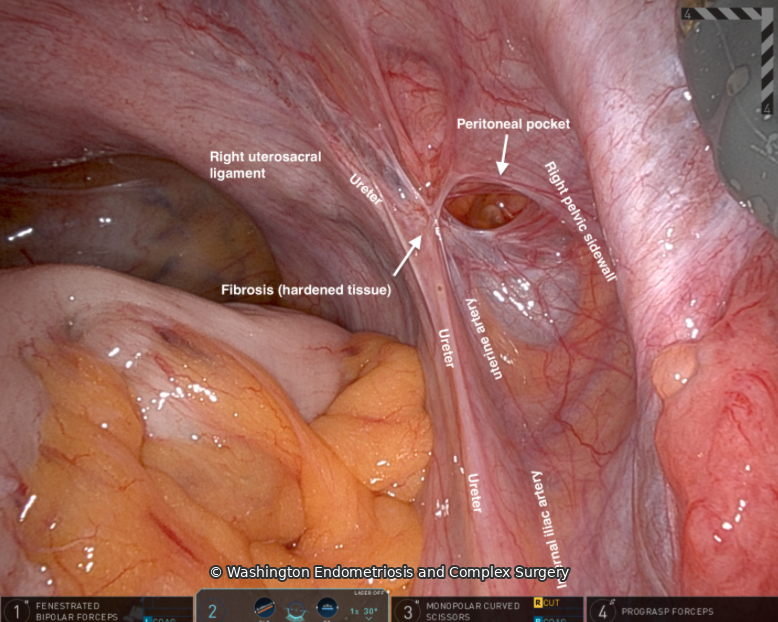
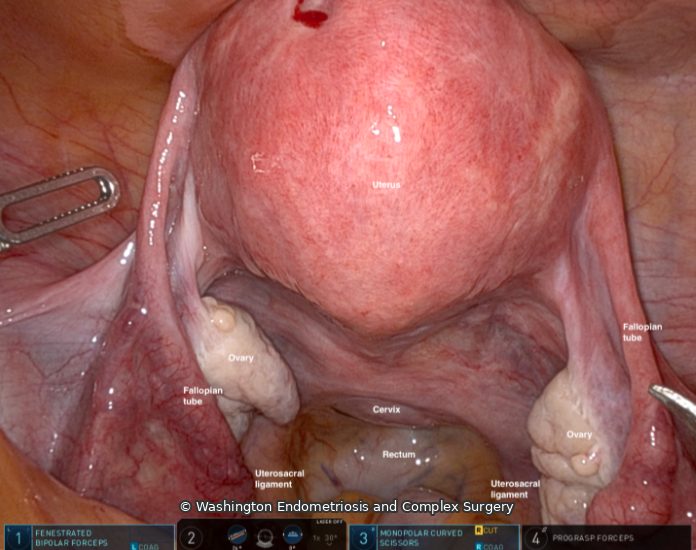
At first glance during her surgery with me, this patient appeared to have minimal disease. Her pelvis looked fairly normal, and there was very little visible endometriosis.
After further exploration, I found a peritoneal pocket with fibrosis on the right side. The peritoneum is the thin lining that covers the pelvic walls and organs. This pocket suggested endometriosis that looked somewhat superficial.
Once I unroofed the lesion to begin the excision, it was clear the disease went much deeper. That pocket led to a deep infiltrating nodule invading down to the level of the pelvic floor, just above the sacral nerve roots, the autonomic nerves of the pelvis, and the sciatic nerve.
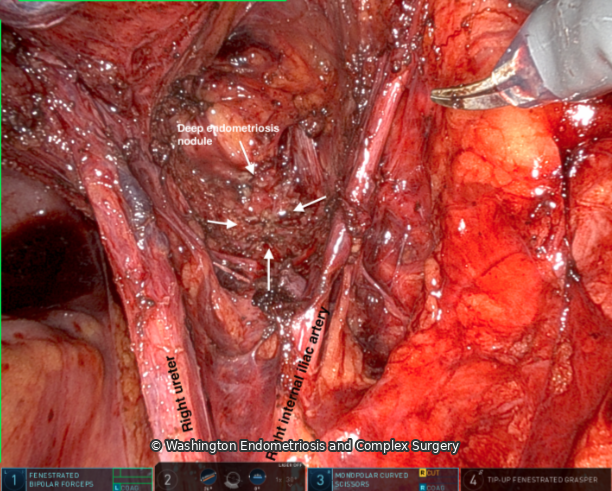
Deep infiltrating endometriosis grows beneath the peritoneal surface into the tissue below. In this patient, the subtle change on the surface was only the visible part of a much deeper lesion.
After the patient's lesion was excised, all her endometriosis symptoms resolved.
Why Ablation Would Not Have Treated This Endometriosis
Ablation uses heat or energy to destroy endometriosis at the surface of the tissue. Excision means cutting the lesion out completely, including the portion that extends below the surface.
Ablation would never adequately treat a lesion like this one. What looked like a small pocket on the surface extended all the way to the pelvic floor. Attempting ablation here would also be unsafe, because of the lesion's sensitive location near vital blood vessels, the ureter, and nerves.
For patients who continue experiencing pain after endometriosis surgery, one important question is whether deep infiltrating endometriosis was identified and completely removed during their original procedure.
The only way to completely remove this nodule was endometriosis excision surgery.
Why Your Endometriosis Surgeon's Experience Matters
Endometriosis does not always look the way people expect. A pelvis can appear nearly normal, and a small pocket in the peritoneum can be the only sign of deep disease.
Finding that disease takes an endometriosis surgeon who knows to look closely. Removing it safely takes a detailed understanding of pelvic anatomy, particularly when a lesion sits this close to the nerves of the pelvic floor.
Her Outcome After Excision
I excised the entire nodule. The final image shows the surgical bed where the nodule had been.
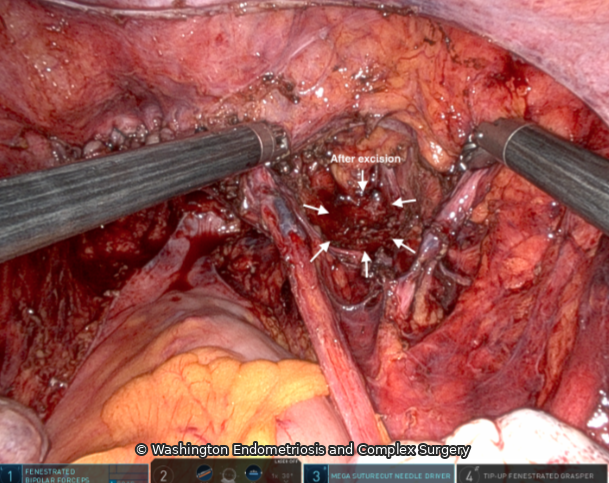
All of her symptoms resolved after her surgery. Every patient is different, and I can't promise the same result for everyone. Her case shows what becomes possible when deep disease is recognized and completely removed.
Choosing an Endometriosis Specialist
If you still have symptoms after endometriosis surgery, or you are planning your first endometriosis surgery, ask your surgeon how they treat endometriosis, whether they perform excision, and how they approach disease near the nerves, blood vessels, and ureters.
At Washington Endometriosis & Complex Surgery, our fellowship-trained surgeons specialize in endometriosis excision surgery, including complex cases involving deep infiltrating endometriosis. We see patients traveling from across the country for surgical treatment, including those seeking organ preservation and fertility preservation options.
Dr. Victoria Vargas, MD, MS, FACOG, is a fellowship-trained minimally invasive gynecologic surgeon and co-founder of Washington Endometriosis and Complex Surgery. An internationally recognized leader in endometriosis surgery, she previously served as Director of Minimally Invasive Gynecologic Surgery for Johns Hopkins Medicine in the National Capital Region and as President of the AAGL Endometriosis Special Interest Group. She specializes in complex endometriosis excision and multidisciplinary surgical care.
Your story is worth telling. The first step is sharing it with us.