Why Does It Hurt to Poop During My Period? Could It Be Endometriosis?
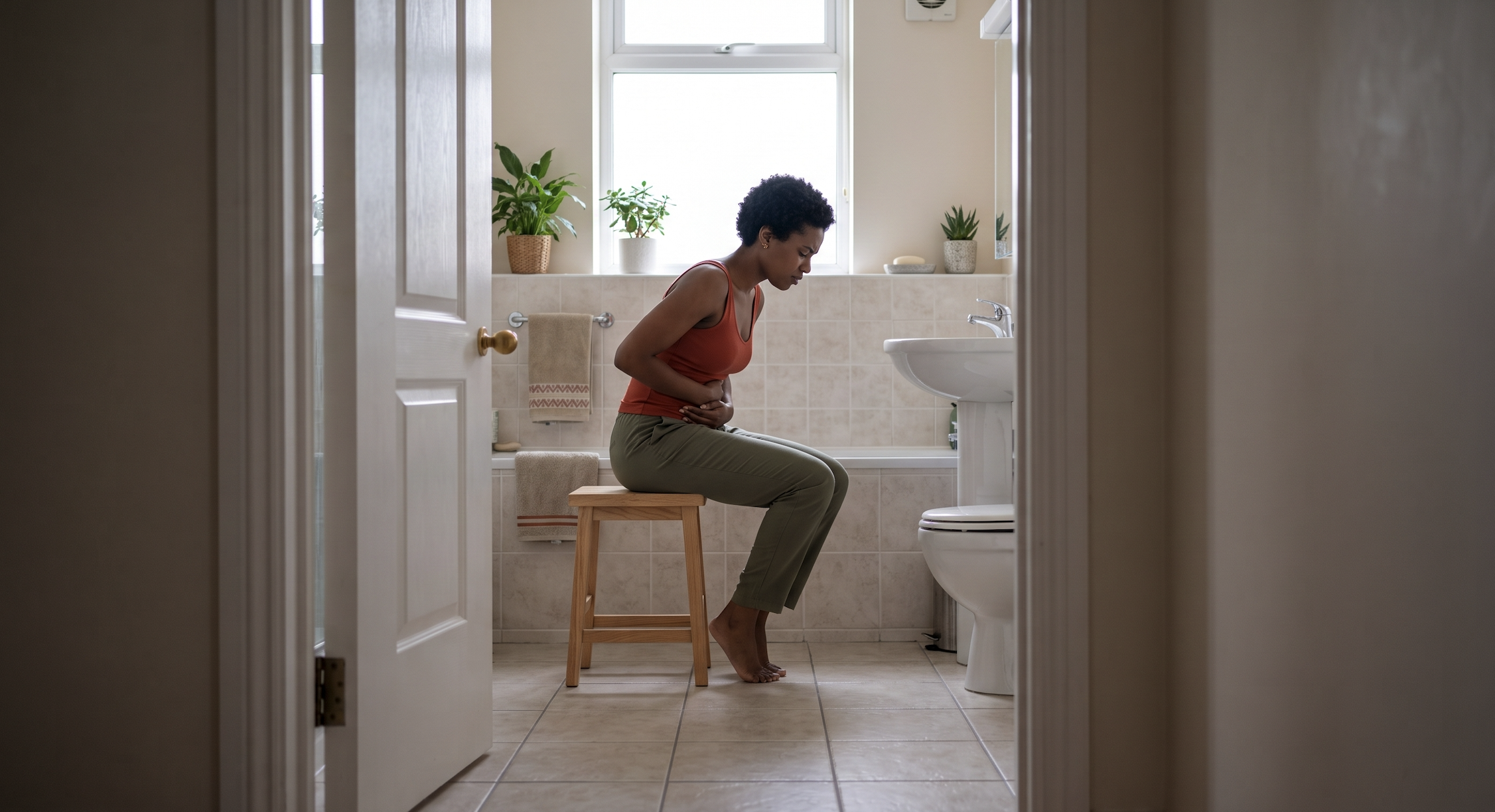
Pain when pooping during your period can have several causes, including bowel endometriosis. Learn the symptoms, how it’s evaluated, and when specialized care may help.
By Dr. Vincent J. Obias, MD, MS, FASCRS · Reviewed by Dr. Victoria Vargas, MD, MS, FACOG
One of the questions we hear from patients with endometriosis is some version of this:
“Why does it hurt so much to poop when I’m on my period?”
Sometimes it has been happening for years. Patients plan around it, dread going to the bathroom during their period, or have simply come to believe that painful bowel movements are part of menstruation.
They can be a symptom of endometriosis.
The medical term for pain with bowel movements is dyschezia, and dyschezia, particularly when it worsens around menstruation, is a recognized symptom of endometriosis. But there is an important distinction: pain with bowel movements does not necessarily mean that endometriosis is growing on or into your bowel.
That is why the pattern of your symptoms matters, but it is only one part of the evaluation.
Why can it hurt to poop during my period?
Your menstrual cycle can affect your gastrointestinal tract even if you do not have endometriosis. Changes in bowel habits, cramping, constipation and diarrhea can all occur around menstruation.
Endometriosis can also cause gastrointestinal symptoms. Some patients describe:
- Sharp or deep pain when having a bowel movement
- Rectal pain or pressure
- Constipation or diarrhea that worsens around their period
- Pelvic pain that increases before or after a bowel movement
- A sensation of incomplete emptying
- Occasionally, rectal bleeding that occurs around menstruation
The timing is useful information. If bowel pain reliably appears or becomes significantly worse around your period, tell your doctor that specifically.
But symptoms alone cannot tell us whether endometriosis is actually involving the bowel. There are other gynecologic and gastrointestinal conditions that can cause similar symptoms.
What is bowel endometriosis?
Bowel endometriosis occurs when endometriosis involves the bowel, most commonly the rectum or sigmoid colon. While endometriosis affects roughly 10% of people with a uterus, approximately 20% experience deep infiltrating disease—and among those with deep infiltrating endometriosis, nearly 30% present with bowel involvement.
The disease can be relatively superficial or extend more deeply into the muscular wall of the bowel. From a surgical perspective, those differences matter. We need to know where a lesion is, how large it is, how deeply it appears to involve the bowel wall and what is happening in the surrounding pelvis.
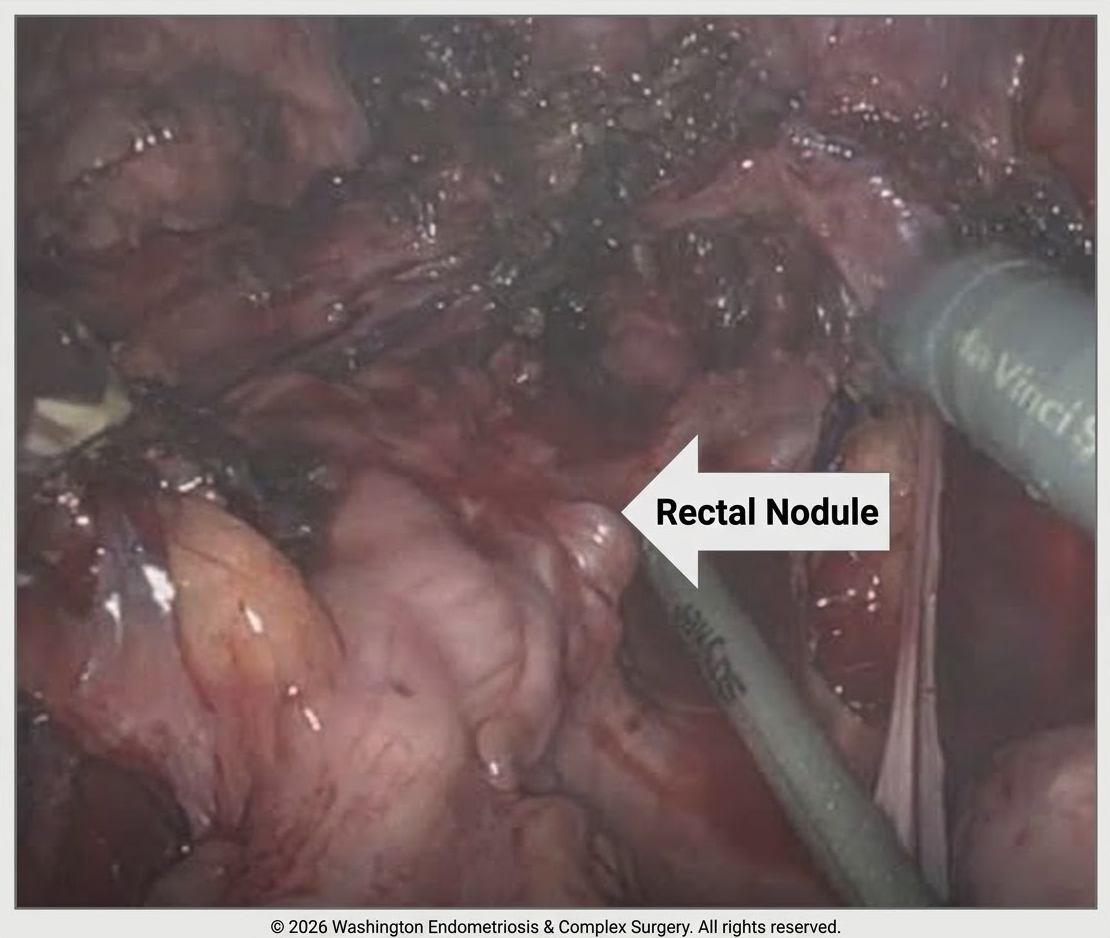
This is also why someone can have bowel endometriosis despite having a gastrointestinal workup that did not identify it.
A colonoscopy, for example, examines the inside of the colon. Endometriosis generally approaches the bowel from its outer surface, so the lining seen during a colonoscopy may appear normal even when endometriosis is present deeper in or around the bowel wall.
This does not mean a colonoscopy is unnecessary when your gastroenterologist recommends one. It means colonoscopy and endometriosis imaging are looking for different things.
Does pain when I poop mean I have bowel endometriosis?
No.
We want to be particularly clear about this because patients understandably become concerned when they read about bowel endometriosis online.
The most common cause of perianal pain with bowel movements is not endometriosis. Many conditions can cause anal pain including anal fissures including constipation and straining, and hemorrhoidal conditions.
You can have painful bowel movements and endometriosis without having disease that directly infiltrates the bowel. Pelvic inflammation, adhesions, disease elsewhere in the pelvis and pelvic floor dysfunction can all contribute to bowel symptoms.
The reverse is also possible: deep bowel disease may be present in someone whose symptoms have been attributed to something else.
We use symptoms to help guide the evaluation. We do not use a single symptom to make the diagnosis.
How do we look for bowel endometriosis before surgery?
When we suspect deep endometriosis, we want to understand as much of the anatomy as possible before we enter the operating room.
A routine pelvic ultrasound and an endometriosis mapping ultrasound are not the same examination. In the United States, comprehensive endometriosis mapping is not part of a universally adopted pelvic ultrasound protocol, and the advanced techniques used to evaluate deep endometriosis require specialized training that most physicians and sonographers do not receive as part of routine gynecologic imaging training.
At Washington Endometriosis and Complex Surgery (WECS), endometriosis specialists Dr. Victoria Vargas and Dr. Melissa McHale perform dynamic ultrasound mapping as part of the surgical evaluation when clinically appropriate. Our examination incorporates the International Deep Endometriosis Analysis (IDEA) group protocol and Morphological Uterus Sonographic Assessment (MUSA) criteria.
Instead of simply looking at the uterus and ovaries, we systematically evaluate the pelvis for findings that can suggest deep disease, including involvement of the bowel, bladder and ureters and obliteration of the posterior cul-de-sac. When bowel endometriosis is visible, ultrasound mapping can give us information about the size of the lesion, its location and how deeply it appears to penetrate the bowel wall.
That information can directly affect how we plan an operation.
The ultrasound is also dynamic. We are evaluating how structures move in relation to one another, not simply looking at a series of static images. And because the surgeon performs the examination, the person interpreting the anatomy is also thinking about what those findings could mean in the operating room.
This type of mapping is still not routinely available in the United States. It is one reason WECS built imaging into our multidisciplinary surgical model rather than treating it as a separate step performed elsewhere.
Ultrasound has limitations. A normal ultrasound does not rule out endometriosis, particularly superficial disease. But when deep or bowel disease can be identified beforehand, we can plan for it.
Can young patients have deep or bowel endometriosis?
Yes.
We recently evaluated a 20-year-old patient whose ultrasound showed a 2.7-centimeter rectal endometriosis nodule.
She had significant pain with bowel movements and had come to think that pain was normal.
There is a persistent misconception that teenagers and young adults are too young to have significant endometriosis. They are not. International endometriosis guidelines specifically address diagnosis and treatment in adolescents and young adults, including symptoms such as dysmenorrhea, dyschezia and chronic or cyclical pelvic pain.
Age should not be used to dismiss symptoms that warrant evaluation.
If endometriosis is found on my bowel, will I need a bowel resection?
Not necessarily.
Hearing the words bowel endometriosis can be frightening, and patients sometimes arrive at our office believing that bowel involvement automatically means part of the colon or rectum will have to be removed.
It does not.
There are several surgical approaches to bowel endometriosis and at WECS, we opt for organ preservation and less radical procedures with the lowest complication rates whenever possible. Depending on the location, depth and extent of disease, treatment may involve shaving the disease from the bowel wall, discoid excision of a localized area, or segmental bowel resection when that is necessary.
Our goal is to preserve a healthy bowel whenever it can be done safely.
This is also why preoperative mapping matters. A small superficial lesion and a larger lesion extending deeply into the rectal wall are different surgical problems. We want to understand that difference before surgery whenever possible.
Why is a colorectal surgeon part of our endometriosis team?
Bowel endometriosis sits at the intersection of gynecologic and colorectal surgery.
As providers, we built WECS around that reality.
Dr. Victoria Vargas and Dr. Melissa McHale are fellowship-trained minimally invasive gynecologic surgeons (MIGS) specializing in endometriosis. Dr. Vincent Obias is a fellowship-trained colorectal surgeon with extensive experience operating on bowel endometriosis. Our multidisciplinary model allows us to plan complex cases together rather than treating colorectal involvement as an unexpected complication of gynecologic surgery.
Approximately 90% of WECS surgeries involve more than one surgeon. That does not mean 90% of patients need bowel surgery. It means we structure the surgical team around the disease we anticipate and have additional expertise available when it is needed.
One scenario we specifically try to prevent is a patient undergoing endometriosis surgery, having significant bowel disease discovered during the operation and then waking up to learn that the disease could not be treated because the appropriate specialist was not there.
When our imaging suggests bowel involvement, we can discuss those findings with the patient beforehand. We can talk about the possible surgical approaches, what Dr. Obias may need to do and what the patient is and is not consenting to before anesthesia.
We think those conversations belong before surgery, not after it.
When should painful bowel movements during your period be evaluated?
Not every uncomfortable bowel movement during menstruation is a sign of endometriosis.
But if it hurts to poop during your period month after month, particularly if the pain is severe, worsening or interfering with your life, it is reasonable to discuss the pattern with a clinician familiar with endometriosis.
We pay particular attention when bowel pain occurs along with symptoms such as severe menstrual cramps, chronic pelvic pain, pain with sex or other gastrointestinal symptoms that predictably worsen with the menstrual cycle.
You do not need to determine for yourself whether the problem is bowel endometriosis before seeking an evaluation. That is our job.
And if you already have endometriosis and are considering surgery, there is another question worth asking:
Has my surgical team evaluated whether the bowel or other pelvic organs may be involved before surgery?
Traveling for bowel endometriosis care
Multispecialty endometriosis surgery is not equally available in every part of the country. WECS is located in Washington, DC, and we evaluate patients who travel for care from throughout the United States, including Pennsylvania, North Carolina, South Carolina, Georgia, Ohio and Illinois.
For patients coming from outside the Washington area, our team works to coordinate the consultation, specialized imaging and surgical planning as efficiently as possible. Some patients come to Washington for their consultation and mapping and return for surgery; others coordinate a longer trip around their care.
FAQs: Painful Bowel Movements & Endometriosis
Why does it hurt to poop during my period?
Menstruation itself can affect bowel function, but significant pain with bowel movements that repeatedly occurs or worsens during your period can also be associated with endometriosis. The symptom alone cannot determine whether endometriosis is involving the bowel.
Does painful pooping during my period mean I have bowel endometriosis?
No. Endometriosis can cause bowel symptoms without directly infiltrating the bowel, and other gastrointestinal, gynecologic and pelvic floor conditions can cause similar pain.
Can I have bowel endometriosis with a normal colonoscopy?
Yes. Colonoscopy evaluates the inner lining of the bowel. Endometriosis generally involves the bowel from the outside inward, so bowel endometriosis may be present without abnormalities visible inside the colon.
Can an ultrasound detect bowel endometriosis?
Yes, deep bowel endometriosis can be identified with specialized transvaginal ultrasound performed by a clinician trained in endometriosis mapping. A normal ultrasound, however, does not exclude endometriosis. At WECS, surgeon-performed dynamic ultrasound is used as a preoperative mapping and surgical-planning tool for appropriate surgical candidates.
Does bowel endometriosis always require bowel resection?
No. The surgical approach depends on the location, depth and extent of disease. Options can include shaving, discoid excision and segmental resection. The goal is to choose the approach appropriate for the individual patient’s anatomy and preserve healthy bowel whenever possible.
What type of doctor treats bowel endometriosis?
Deep bowel endometriosis may require both advanced gynecologic endometriosis expertise and colorectal surgical expertise. At WECS, our fellowship-trained MIGS and colorectal surgeons work as one multidisciplinary surgical team so that bowel involvement can be properly evaluated and planned for before surgery.
Your story is worth telling. The first step is sharing it with us.
.webp)