.webp)
.webp)
What is Endometriosis Excision Surgery?
Excision surgery removes endometriosis lesions at the root rather than destroying the surface tissue with ablation. Because endometriosis can be complex and difficult to identify, surgery should be performed by an experienced endometriosis specialist.
Why Specialist Excision Matters
“Endometriosis can involve multiple organs. Successful excision requires the experience to find it, remove it completely, and preserve healthy tissue.”
Endometriosis can affect multiple organs and patients often present with different symptoms of the disease. Excision surgery aims to remove endometriosis, restore normal anatomy whenever possible, and preserve healthy organs.
Endometriosis surgery is about more than removing visible disease.
It requires identifying all forms of endometriosis, restoring normal anatomy, preserving organs, and addressing disease that may involve the bowel, bladder, ureters, diaphragm, or other pelvic structures.
When performed by an experienced multidisciplinary team, complete excision offers the best available surgical treatment for appropriately selected patients while helping reduce persistent disease and the need for repeat surgery.
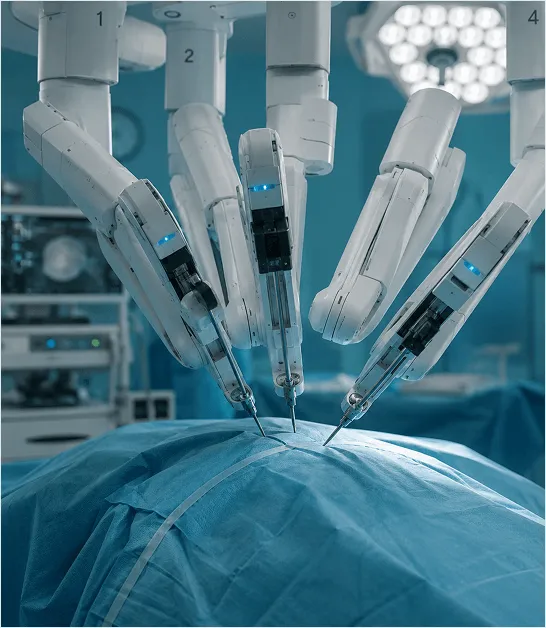
Excision Surgery, and Why We Use Robotics to Do It
Excision removes endometriosis by carefully cutting away the disease while preserving healthy tissue whenever possible. We perform every procedure using the da Vinci robotic platform, which provides magnified 3D visualization and articulated instruments that allow for precise dissection around delicate nerves, blood vessels, and organs.
Surgery is treatment, not a cure. Endometriosis can recur though that rate can be much lower when surgery is performed properly by a specialist the first time. What complete excision by a prepared team offers is the best available outcome, and an honest accounting of what that means.

Multispecialty expertise, built into your first surgery
More than 90% of our endometriosis surgeries include a bowel or other surgical specialist alongside our gynecologic surgeons, providing the expertise to treat complex disease in a single operation.
Complete excision is associated with lower recurrence rates, greater pain relief, and better fertility outcomes. At WECS, we perform excision surgery using the da Vinci robotic platform with the appropriate specialists involved from the start.
When bowel endometriosis is discovered during non-specialist surgery without a colorectal specialist present, disease may be left behind or a second surgery may be needed. At WECS, bowel and other surgical specialists are incorporated from the start so complex disease can be treated during the same operation.
Organ preservation guides our approach. More extensive procedures, including bowel resection, are performed only when necessary and discussed with patients before surgery, not decided unexpectedly in the operating room.
"I had been told my bowel symptoms were unrelated to my endometriosis. WECS found bowel disease that had never been addressed. It was all handled in one surgery."
Pre-Operative Surgical Mapping with Dynamic Ultrasound
For superficial endometriosis, ultrasound often misses it. For deep infiltrating disease — especially bowel involvement — that changes. WECS surgeons perform advanced dynamic ultrasound mapping, a technique requiring surgeon-level training not available elsewhere in the US. We identify suspected deep endometriosis before surgery, map its extent, and build your surgical plan together. Every decision that can be made in advance, is.
"I had a scan before surgery that showed exactly where everything was. By the time I woke up, it had all been addressed. No surprises."
- WECS patient, Washington DC
Is Endometriosis Affecting Your Life?
WECS is a specialist surgical practice. Not every patient is a surgical candidate, and an evaluation comes before any recommendation. But if any of the following describes you, your case is worth submitting.
You do not need a referral. You do not need a prior diagnosis. You need a case that warrants surgical evaluation and a team prepared to review it honestly.
Your periods are painful enough to interfere with work, school, sleep, or daily activities.
You have pain with bowel movements, constipation, diarrhea, bloating, or other recurring GI symptoms.
You experience chronic pelvic pain, pain with ovulation, or pelvic pain between periods.
You have pain during or after sex, or persistent pelvic floor pain or pressure.
You experience urinary urgency, frequency, bladder pain, or recurring UTI-like symptoms without an infection.
You are having difficulty becoming pregnant or have fertility concerns that may be related to endometriosis.
You have unexplained cyclical pain outside the pelvis, including back, leg, chest, or shoulder pain.

Tell us about your case
Submit your case through our intake form. Our surgical team reviews every submission personally. You will hear from us within two to three business days with an honest answer about whether we can help and what next steps look like.
If another provider or approach would serve you better, we will tell you that too.
.webp)