Why Colorectal Surgeons Need to Talk More About Endometriosis
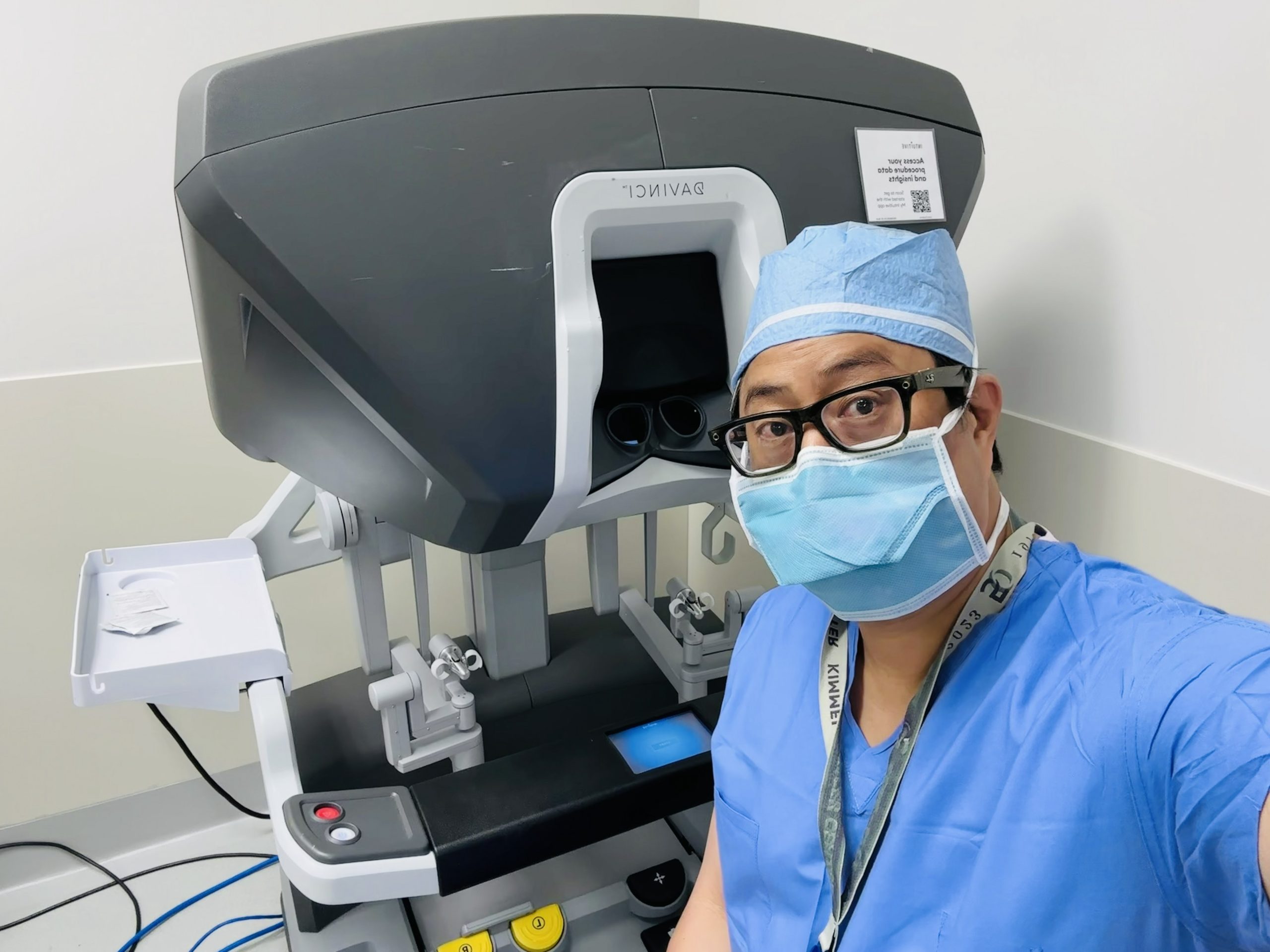
Every year, colorectal surgeons gather at the American Society of Colon and Rectal Surgeons (ASCRS) annual meeting to share research, refine surgical technique, and raise the standard of care in our...
By Dr. Vincent J. Obias, MD, MS, FASCRS · Reviewed Dr. Victoria Vargas, MD, MS, FACOG
Every year, colorectal surgeons gather at the American Society of Colon and Rectal Surgeons (ASCRS) annual meeting to share research, refine surgical technique, and raise the standard of care in our field.
This year, I had one agenda item: bowel endometriosis.
As a colorectal surgeon and co-founder of Washington Endometriosis and Complex Surgery (WECS), bowel endometriosis is my specialty and my focus. And after years of seeing what happens to patients when this disease is missed, undertreated, or handed off to surgeons who weren't prepared for it, I needed to have this conversation with my colleagues.
Think your symptoms might involve your bowel?
See if you're a candidate for consultation at WECS
Colorectal Surgeons Are Trained for the Wrong Disease
Colorectal surgeons are among the most technically skilled physicians in medicine. Our training centers on colorectal cancer, inflammatory bowel disease, and other serious gastrointestinal conditions where aggressive, radical surgery is often necessary and life-saving.
Endometriosis is not those diseases. And that distinction matters enormously.
Bowel endometriosis affects approximately 5 to 12 percent of patients with endometriosis. Up to one in four patients with deep infiltrating endometriosis has bowel involvement, most commonly affecting the rectum and sigmoid colon.
Despite how common this is, most colorectal surgeons receive little to no formal training in bowel endometriosis during residency or fellowship. The result is a pattern most endometriosis patients already know too well.
What Actually Happens in the OR
A colorectal surgeon is called in unexpectedly, sometimes mid-operation. There has been no prior consultation with the patient. No multidisciplinary planning. No conversation about surgical options designed specifically for endometriosis.
In some cases, bowel involvement isn't discovered until surgery has already begun. If a colorectal specialist isn't available, lesions are left behind. The patient wakes up with disease still in her body and is told she needs another major operation.
These are not rare cases. My colleagues and I see these patients regularly. They have often already spent years being dismissed before receiving a diagnosis. An incomplete surgery is not just a clinical setback. It is another chapter in a story that should have ended differently.
If you have had surgery that left disease behind, you have options.
Why We Built a Different Model
Washington Endometriosis and Complex Surgery was built around one principle: patients with complex endometriosis deserve a surgical team that is ready for every dimension of their disease before they are ever on the table.
Dr. Melissa McHale and Dr. Victoria Vargas manage the gynecologic components of surgery. I manage bowel involvement. When the extent of disease requires it, we bring in additional specialists, including thoracic or general surgeons. Every case is planned collaboratively. No surprises in the OR. No leaving disease behind because the right surgeon wasn't in the room.
This is not how most endometriosis surgery is done. It is how it should be done.
Ready to talk to a team that plans for everything?
Less Radical. More Precise.
When I left traditional colorectal surgery to focus almost exclusively on bowel endometriosis, colleagues were surprised. The need wasn't surprising to me.
Traditional colorectal training defaults to bowel resection, meaning the removal of a segment of bowel entirely. For cancer, that approach is often appropriate. For endometriosis, it frequently is not.
Techniques like shaving and disc excision can remove disease effectively while preserving healthy bowel tissue and reducing the risk of complications. These approaches require experience, careful patient selection, and surgeons who understand that endometriosis is a fundamentally different disease that should not be treated like a malignancy.
The surgical approach your team takes matters. The conversation you have before surgery matters. The plan that exists before the first incision matters.
The Conversation Is Changing
What gave me the most confidence at this year's ASCRS meeting was the openness I encountered. Colleagues asked real questions. They were interested in multidisciplinary models. They recognized the gap.
Colorectal surgeons care about their patients. The issue has never been intent. It has been preparation, training, and access to a collaborative model designed specifically for this disease.
That model exists. We built it.
You Deserve a Surgical Team That Is Ready
If you have been diagnosed with deep infiltrating endometriosis or bowel endometriosis, or if you suspect your symptoms may involve bowel involvement, the surgical team you choose changes your outcome.
Washington Endometriosis and Complex Surgery offers multidisciplinary surgical care for patients with complex endometriosis in Maryland, Virginia, and Washington DC. We accept out-of-network benefits.
Not sure if your symptoms point to bowel endometriosis? Take the first step and book a consultation
Already diagnosed and looking for a surgical team you can trust?
Your story is worth telling. The first step is sharing it with us.
.webp)